
The Future of Food Is About Experience
Flavor Is No Longer Just About Taste
As we move into 2026, flavor innovation is entering a new era. In a world shaped by economic uncertainty, rising living costs, and evolving consumer lifestyles, people are looking for more than delicious food—they seek products that provide comfort, excitement, authenticity, and emotional connection.
According to insights from the Institute of Food Technologists (IFT), flavor has become a strategic tool for creating memorable consumer experiences. Successful food products are no longer defined solely by how they taste but also by the stories they tell, the emotions they evoke, and the value they deliver.
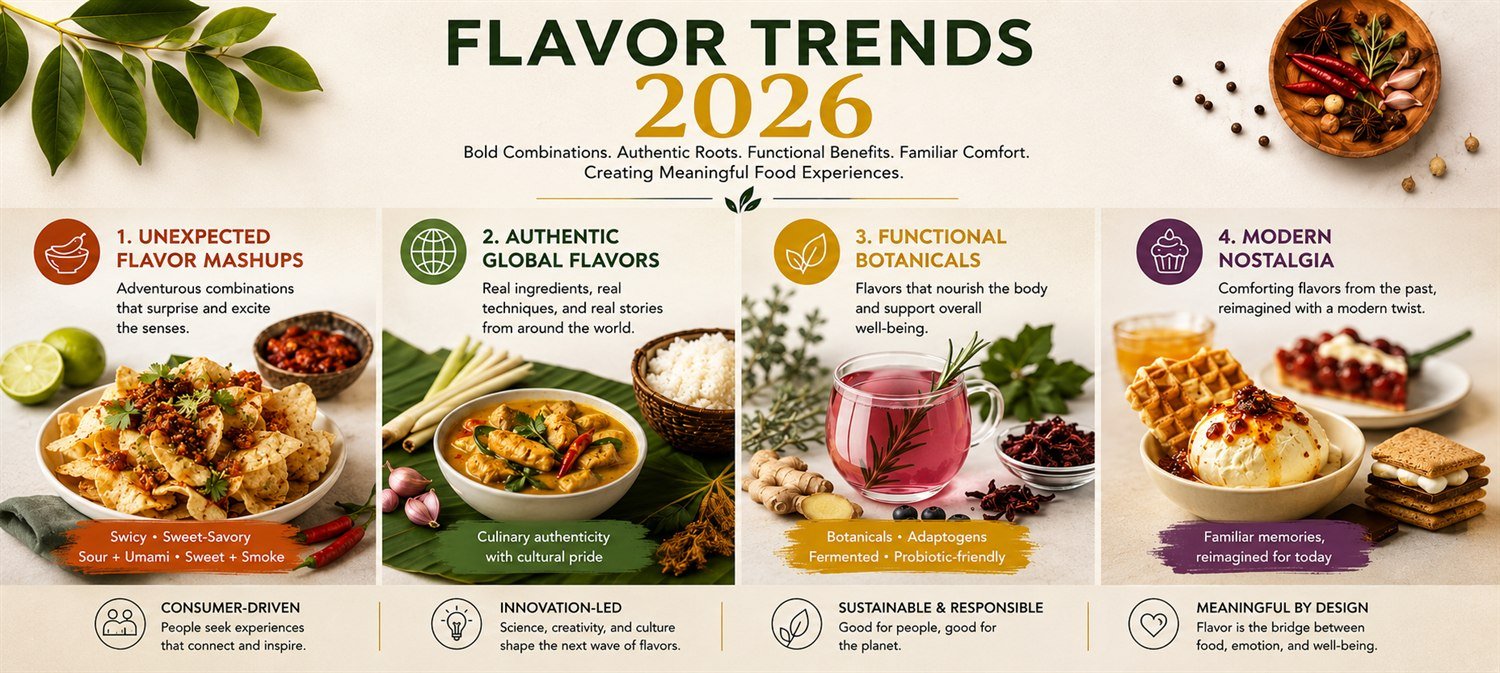
1. Unexpected Flavor Mashups
Consumers, particularly Gen Z, continue to embrace adventurous eating experiences. They are increasingly attracted to bold and unconventional flavor combinations that challenge traditional expectations.
Some of the most influential combinations include:
- Sweet and spicy (“Swicy”)
- Sweet and savory
- Sour with umami
- Sweet paired with smoky notes
Ingredients such as yuzu, tamarind, miso, black garlic, gochujang, harissa, chili crisp, and fermented seasonings are becoming increasingly popular across snacks, beverages, sauces, and ready-to-eat meals. These combinations create exciting sensory experiences while offering products with a unique market identity.
2. Authentic Global Flavors
Today’s consumers are becoming more knowledgeable about international cuisines and increasingly value authentic culinary experiences. Rather than simplified or localized interpretations, they seek flavors that genuinely represent their cultural origins.
For food manufacturers, this means incorporating traditional ingredients, regional recipes, and authentic preparation techniques into product development. Storytelling about ingredient origin and culinary heritage has become an important part of building consumer trust and product differentiation.
3. Functional Flavors for Health and Wellness
Health-conscious consumers continue to drive demand for foods that combine enjoyable flavors with functional benefits. Flavor is now expected to complement wellness rather than compete with it.
Botanical extracts, herbs, adaptogenic ingredients, fermented foods, and naturally derived flavors are gaining popularity because they contribute both distinctive sensory characteristics and perceived health benefits.
This trend reflects a growing preference for products that support overall well-being while maintaining an enjoyable eating experience.
4. Modern Nostalgia
Nostalgia remains a powerful influence on consumer purchasing decisions, but it is evolving. Instead of simply recreating traditional flavors, manufacturers are modernizing familiar tastes with innovative ingredients and contemporary culinary techniques.
Examples include:
- Fruit punch enhanced with tropical fruits such as guava
- Maple-inspired flavors incorporated into savory barbecue products
- Hot honey paired with pizza
- Chili crisp used in frozen desserts
- Seasonal flavors inspired by orange sherbet, cherry pie, and s’mores
These products successfully combine familiarity with novelty, allowing consumers to reconnect with comforting memories while discovering something new.
What Does This Mean for Food Scientists and SMEs?
For food scientists, flavor development has become increasingly interdisciplinary. Product innovation now requires an understanding of sensory science, consumer psychology, cultural influences, nutrition, and market trends.
For food entrepreneurs and small- and medium-sized enterprises (SMEs), these trends present valuable opportunities to create products that differentiate themselves through authentic local ingredients and innovative flavor concepts.
Countries rich in agricultural biodiversity can transform indigenous ingredients into premium products by combining traditional flavors with modern food technology. Tropical fruits, native herbs, spices, and fermented ingredients all have significant potential to meet the growing global demand for distinctive and authentic flavor experiences.
Looking Ahead
Flavor trends in 2026 demonstrate that consumers expect much more than great taste. They seek products that create emotional connections, celebrate cultural authenticity, support healthier lifestyles, and deliver memorable sensory experiences.
For food scientists and product developers, understanding these evolving preferences will be essential for creating the next generation of successful food and beverage products. The future of flavor is not simply about making food taste better—it is about creating experiences that consumers remember, enjoy, and return to again and again.
Reference
This article summarizes insights from: Cvetan, D. (2025, October). Outlook 2026: Flavor Trends. Food Technology Magazine, Institute of Food Technologists (IFT). https://www.ift.org/food-technology-magazine/outlook-2026-flavor-trends